September 5, 2023 · Mechanic Lien
Illinois Cell Tower Mechanic's Liens: A Telecom Contractor's Guide
Unpaid on an Illinois cell tower project? Learn who gets the Section 24 notice, how to serve it, when to record and enforce a lien, and how to protect your receivables before mobilizing.
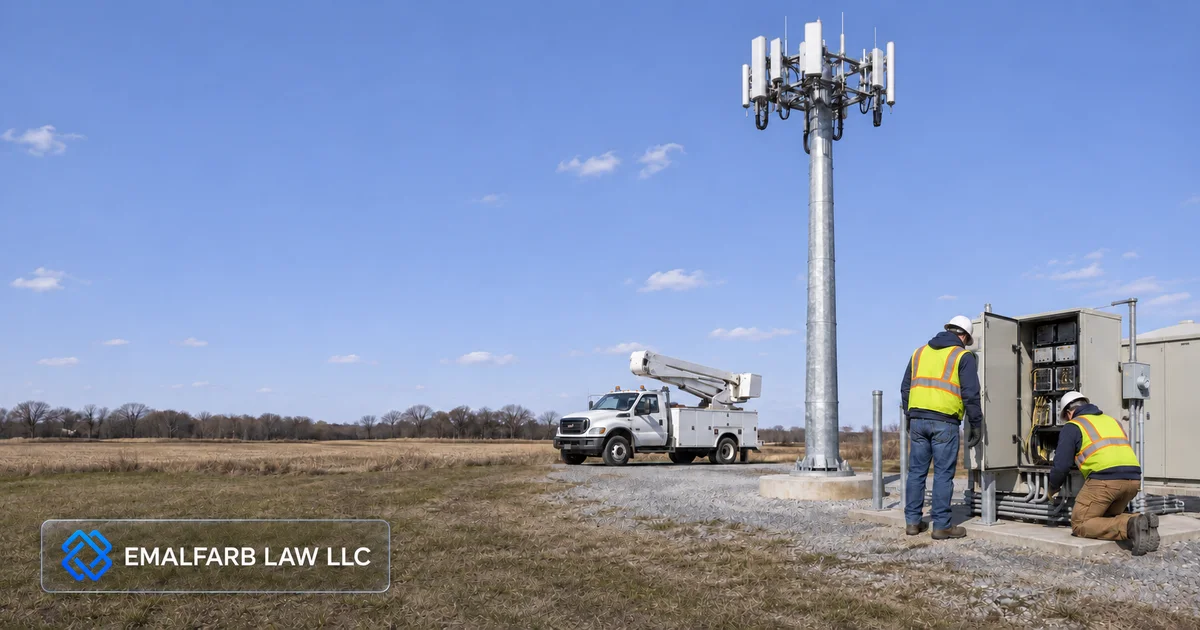
If a tower company, carrier, or general contractor stops paying, preserve your Illinois lien rights while you pursue the invoice. First, identify who hired you, who holds the ground lease, who owns the land, and when your last lienable work was completed. On a private project, a subcontractor generally has 90 days to serve its claim notice, and a claimant should generally record within four months to protect against third parties. Those periods can run at the same time. A demand letter to your customer and a promise that payment is coming are no substitute for statutory notice and recording.
Identify the property interest that can secure your invoice
Under Section 1 of the Illinois Mechanics Lien Act, a contractor can claim a lien for qualifying improvements under a contract with the owner or someone the owner authorized or knowingly permitted to contract. The Act can reach different property interests, including a leasehold. A private tower site may have a fee owner, a tower company with a ground lease, a wireless carrier with a separate site agreement, and a general contractor. Their roles determine whose interest you can claim against and what notices you need.
Start with a current title search, the vesting deed, the ground lease or recorded memorandum, easements, mortgages, and any written owner consent. Match the legal description and parcel index number to the work, including the tower compound, access route, and conduit alignment. A tower ID, street address, or GPS pin helps find the site. The recorder needs a property description that sufficiently identifies what you seek to charge.
A purchase order from the tower company may support a claim against its leasehold. Reaching the landowner's fee interest requires facts supporting the statutory basis for that claim, such as lease provisions requiring the specific improvements or written approval showing the owner authorized the work. In Leveyfilm, Inc. v. Cosmopolitan Bank & Trust, 274 Ill. App. 3d 348 (1995), the Illinois Appellate Court recognized the significance of an owner's authorization of tenant improvements. Get the lease and approvals before assuming which interest stands behind your receivable.
Separate qualifying construction from service work
Excavation, concrete foundations, underground conduit, grounding systems, and structural tower or rooftop mount installation ordinarily present stronger improvement facts. For radio units, antennas, cabinets, and related wiring, document how the equipment was installed and how it serves the real-property improvement. Section 1 covers qualifying labor, materials, fixtures, apparatus, and machinery. Removability, the lease's removal rights, and whether the work was installation, an equipment swap, or routine service all matter. Itemize monitoring, software, maintenance, and other potentially nonlienable charges separately so you can support the amount you claim.
Calendar the Illinois deadlines from your own scope
- 90 days for a subcontractor's notice. Under Section 24, serve the written notice within 90 days after completing your contract, subject to the statute's treatment of qualifying extra work or final delivery of extra materials. You may serve after making your contract, before the deadline starts running.
- Four months to protect against third parties. Under Sections 7 and 28, generally record a verified lien in the county where the improvement sits, or file an enforcement action, within four calendar months after the applicable completion date to preserve your claim against purchasers, lenders, and other protected third parties. Illinois appellate courts distinguish recording from filing suit. Section 28's 10-day period applies before suing to enforce the lien. Serve the notice first and record on time even if that period has yet to expire.
- Two years to enforce. Under Section 9, file suit or the applicable counterclaim within two years of the statutory completion date. Section 7 may allow a claim against the owner alone within two years even when third-party protection was lost. A valid Section 34 demand can shorten the time to act to 30 days.
Example. An Illinois tower subcontractor completes its contracted installation on August 18, 2026, with no qualifying extras. The ordinary Section 24 notice date is November 16, 2026, and the four-month date is December 18, 2026. The ordinary two-year enforcement date is August 18, 2028, subject to an earlier deadline if a valid Section 34 demand is served. Calendar all three at closeout and send notice well before the first date.
Use the completion date for your own contracted scope. Compare field tickets, final delivery records, change orders, and commissioning reports. Required commissioning or genuine additional work may affect the date. A warranty swap, corrective visit, or later invoice should not be used to extend it. In Cyclonaire Corp. v. ISG Riverdale, Inc., 378 Ill. App. 3d 554 (2007), the court upheld a finding that warranty service did not extend the time to serve notice.
Serve the Section 24 notice on the right parties
- Who serves. A Section 1 contractor generally does not serve a Section 24 subcontractor notice. Subcontractors and suppliers with qualifying claims under Sections 21 and 22 should evaluate and preserve their notice rights. If your status is uncertain, Section 24(b) lets you serve without admitting subcontractor status.
- Who receives it on a leased tower site. Start by identifying the current ground lessee, often the tower company. Serve the lessee separately when its leasehold is the interest you seek to lien. As a practical safeguard, also serve the fee-simple owner identified in the deed. Section 24 calls for notice to the owner of record or a recipient specified by the statute, such as the owner's agent or architect or the superintendent in charge of the improvement. Separately serve the lending agency if known. Check the ground lease or recorded memorandum and any assignments for the lessee's current legal name. Use a separate notice and keep separate proof of service for each recipient.
- How to serve. Use registered or certified mail with return receipt requested, a nationally recognized delivery company with tracking, or personal service. Current Section 24 treats notice placed with the delivery service or in the mail as served at that time. Public Act 103-0827, effective January 1, 2025, removed the addressee-only restriction from Section 24. For certified mail, request the return receipt at mailing and keep the dated acceptance receipt, tracking number, delivery history, and return receipt if available. For personal service, keep a signed proof of service. Keep the exact notice and address used for each recipient. Standard email and ordinary first-class mail are outside the listed methods.
- What it says. Identify the claimant, the company that hired it, the work or materials, the site and a substantial property description, and the amount due or to become due. Date and sign the notice. Track invoice numbers, credits, and retainage in the supporting records so you can explain the amount.
Example. A tower company leases a farm parcel and hires a general contractor, who hires you to install conduit. Start with the tower company as ground lessee and serve the farm owner separately. If a lending agency is known, serve it as well. The lease and the landowner's authorization help determine whether a lien can reach the fee interest in addition to the leasehold. Serving both parties preserves your notice position while you investigate those facts.
Under Sections 5, 22, and 24, a qualifying sworn contractor or subcontractor statement that gives the owner the required notice can excuse separate Section 24 notice. If the statement understates your balance, the protection from the statement is limited to the amount it lists. Verify that the owner received the actual sworn statement and that your amount is correct. Section 25 also provides a 90-day recording procedure for specified recipients who cannot be found in the county after reasonable diligence or do not reside there. It substitutes only for notice to qualifying recipients. Serve the others by the applicable method.
The separate Section 21(c) 60-day notice generally concerns work on an existing owner-occupied single-family residence. A private commercial tower site ordinarily follows the Section 24 analysis.
Record the lien and preserve collection options
Reconcile the contract and approved changes against payments, credits, any disputed charges, and the remaining lienable balance. The Section 7 claim is verified by affidavit and includes a brief statement of your contract, the net balance, and a sufficiently accurate property description. State the supported completion date so a third party can assess timeliness, as discussed in Cordeck Sales, Inc. v. Construction Systems, Inc., 382 Ill. App. 3d 334 (2008). Keep the recorder's receipt and recorded instrument. For multiple sites under one master contract, track the scope, balance, parcel, and completion date by site.
Serve early if the owner may pay the prime contractor. Under Section 27, statutory notice can require the owner to retain enough from sums due or to become due to the contractor to cover valid claims. Earlier payments and sworn statements can affect what remains recoverable. In parallel, send a contractual demand with the invoice ledger and supporting approvals. Identify any available payment bond, written guaranty, or direct-pay agreement, and calendar its separate claim requirements. Preserve the contract claim for amounts owed by your customer, including amounts that may fall outside the lien.
File enforcement in the circuit court of the county where the improvement sits and identify the necessary parties under Section 11. If a Section 34 demand arrives, escalate immediately. A valid demand served by registered or certified mail with return receipt requested or by personal service can require suit or an answer in a pending suit within 30 days after service, with forfeiture of the lien for missing the deadline. Save the notice, envelope, and delivery record.
Protect the company before the next mobilization
- Know the customer and the site. Confirm the legal name of the party promising payment, its authority to order the work, the owner of record, the leasehold, and the parcel. Get written authorization before dispatching crews or ordering custom equipment.
- Limit credit exposure. Use deposits or material payments, clear progress milestones, payment due dates, defined retainage release, and a right to suspend work after contractual notice and any cure period. When the customer is thinly capitalized or the leasehold offers limited security, seek a guaranty, payment bond, or written direct-pay arrangement. Section 1(c) generally allows additional security without waiving lien rights, subject to a valid express agreement.
- Build the evidence as you work. Keep site-specific purchase orders, signed change orders, delivery tickets, daily logs, acceptance records, photos, and correspondence. Have project managers send actual completion and extra-work dates to accounting so deadlines are tracked separately from invoice aging.
- Control lien waivers. Tie each waiver to identified payments and its covered through-date. Use a conditional waiver when funds are pending and expressly reserve unpaid retainage, disputed extras, and other excluded amounts. Review the language before signing a final waiver. Section 1(d) generally bars prospective lien waivers given to obtain the contract, but payment-related waivers require separate review.
Check for public remedies before using a private lien form
If the tower or related construction was procured under an Illinois public contract, identify the awarding entity and request the bond. For a covered claim under Section 2 of the Illinois Public Construction Bond Act, file a verified notice within 180 days of your last covered work or furnishing. For State work, file with the awarding officer, board, bureau, or department. For a political subdivision, file with its clerk or secretary. A copy goes to the prime contractor within 10 days after that filing. Follow the Bond Act's separate service language, including its addressee-only return-receipt language for mail, and calendar the current statute's one-year suit deadline from the claimant's last covered work or furnishing. A Section 23 lien on public funds may also be available against funds due to the prime contractor, with its own notice and enforcement rules. A private carrier using public land can present a different arrangement. Check the actual ownership and contracting documents before choosing a remedy.
If you have an unpaid Illinois tower invoice, gather the contract, the site address or tower ID, your last work and delivery dates, and the balance due. Contact Emalfarb Law to evaluate who must receive notice, what property interest may secure the invoice, and which collection deadline comes first.